
Capacity, location, fixtures and key information about BC Place ahead of the 2026 World Cup
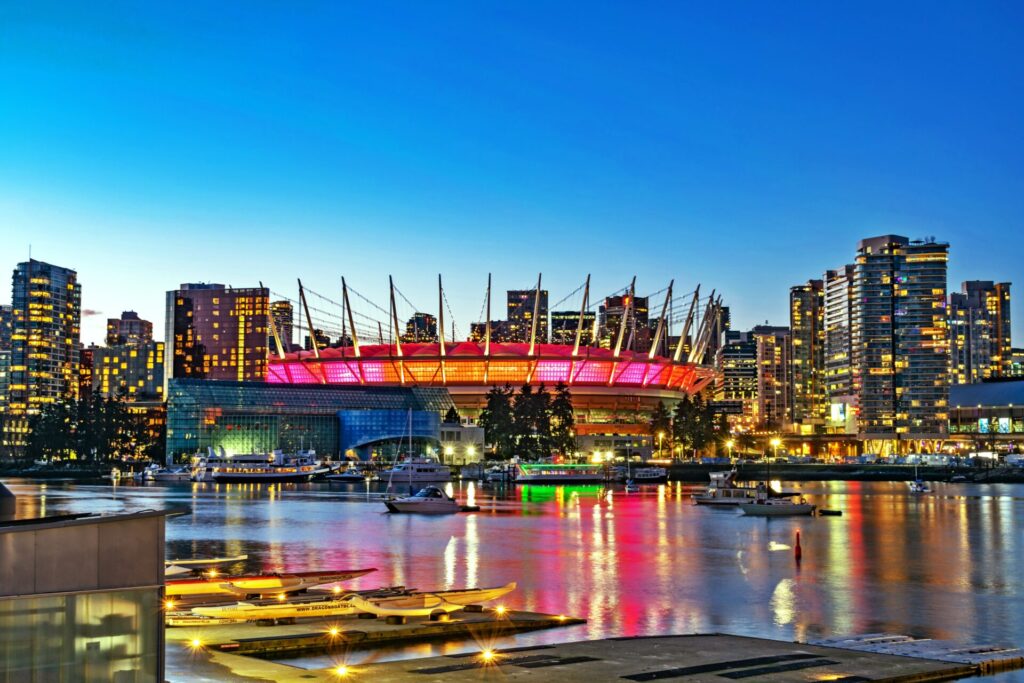
BC Place, a landmark of the British Columbia skyline, is set to be a cornerstone of Canada’s World Cup hosting duties. Known globally for its unique retractable roof and its role as the centrepiece of the 2010 Winter Olympics, the venue has recently undergone a series of extensive renovations to prepare for the 2026 tournament.
These upgrades include modernised hospitality suites, enhanced accessibility features, and upgraded player facilities. In accordance with FIFA’s commercial neutrality policy, the stadium will be officially referred to as ‘Vancouver Stadium’ for the duration of the event.
Where is BC Place?
BC Place is situated at 777 Pacific Boulevard in the heart of downtown Vancouver’s stadium district. Located on the north side of False Creek, it is perfectly integrated into the city’s urban fabric.
The venue is exceptionally accessible via public transport; fans can use the SkyTrain’s Expo Line to reach the Stadium-Chinatown Station or the Canada Line to Yaletown-Roundhouse Station.
For those arriving from further afield, the stadium is a short distance from the Pacific Central Station, providing rail and bus links across the region.
How many seats does BC Place have?
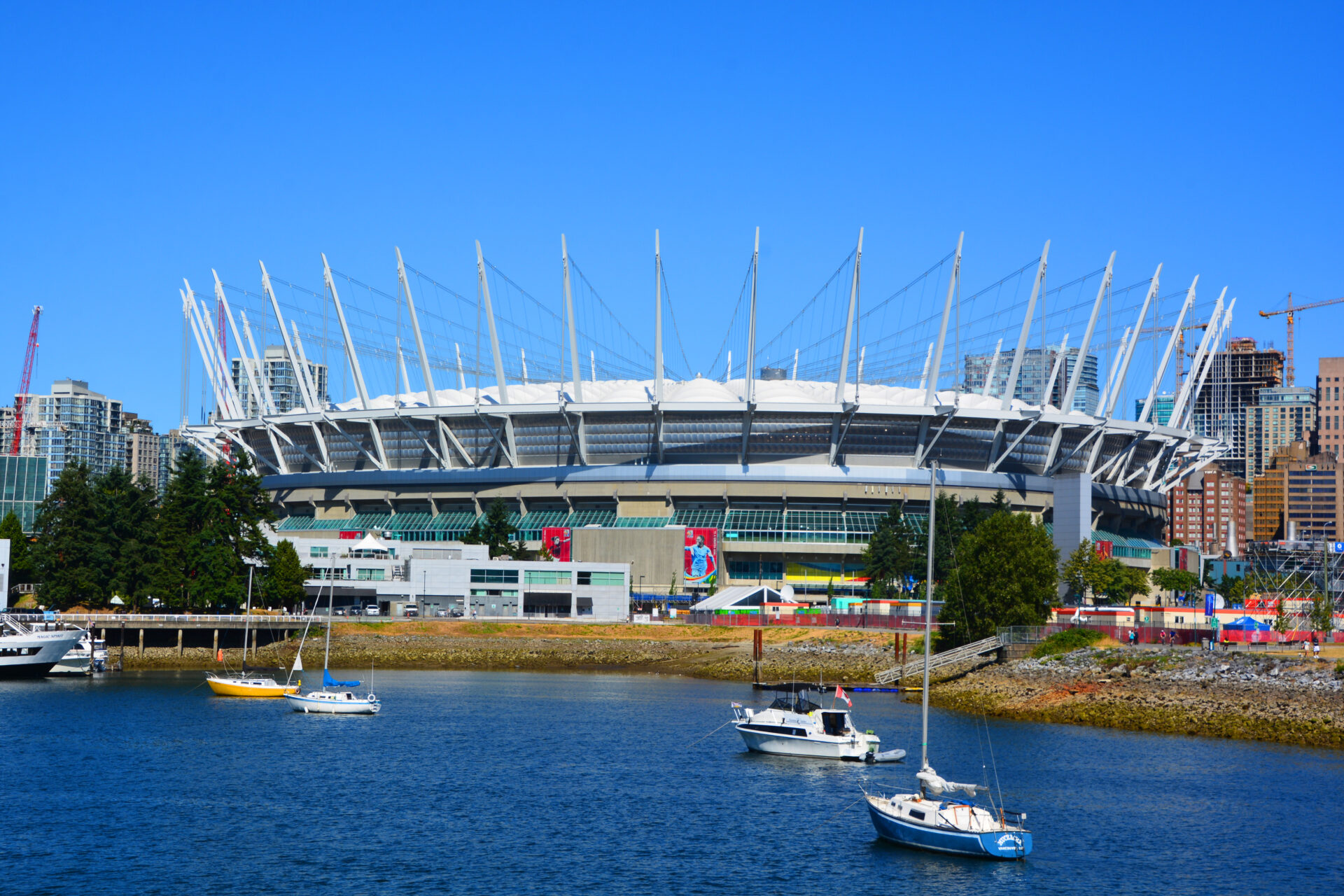
For the 2026 World Cup, BC Place will have a tournament capacity of approximately 54,000. The venue is famous for its cable-supported retractable roof, the largest of its kind in the world, which allows matches to be played in a climate-controlled environment while maintaining an open-air feel.
The steep grandstands are designed to ensure that even those in the upper tiers are close to the pitch, creating an intense and high-energy atmosphere.
Who plays at BC Place?
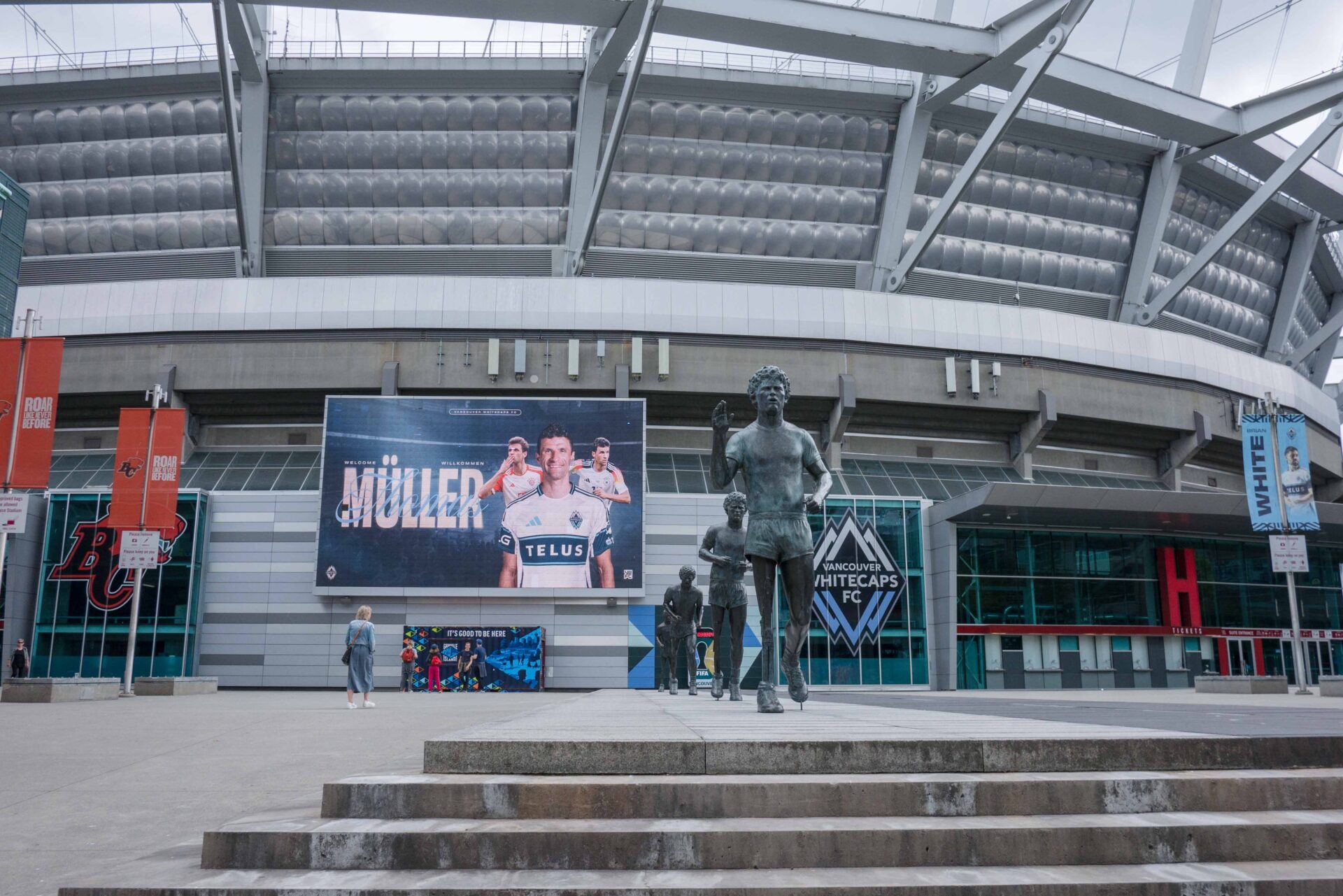
The stadium serves as the permanent home for the Vancouver Whitecaps FC of Major League Soccer and the BC Lions of the Canadian Football League.
It is a seasoned host for international football, having staged numerous matches for the Canada men’s and women’s national teams, as well as the final of the FIFA Women’s World Cup 2015.

Who owns BC Place?
BC Place is owned and operated by the BC Pavilion Corporation (PavCo), a Crown corporation of the province of British Columbia.
The facility originally opened in 1983 and underwent a massive revitalisation project between 2010 and 2011 to replace its original air-supported dome with the current retractable roof system.
Suggested Articles


How many World Cup matches will be played at BC Place?
BC Place will host seven matches during the 2026 World Cup. The schedule is particularly significant for local fans, as it includes two group-stage matches featuring the Canada national team, as well as high-stakes knockout fixtures in the Round of 32 and Round of 16.
BC Place World Cup 2026 fixtures
Times are listed as Local (PT) / CET / UK (BST).
Group stage
- Australia vs. Turkey (Match 6)
JUNE 13 – 21:00 Local / 06:00 CET (JUNE 14) / 05:00 UK (JUNE 14) - Canada vs. Qatar (Match 27)
JUNE 18 – 15:00 Local / 00:00 CET (JUNE 19) / 23:00 UK - New Zealand vs. Egypt (Match 40)
JUNE 21 – 18:00 Local / 03:00 CET (JUNE 22) / 02:00 UK (JUNE 22) - Switzerland vs. Canada (Match 51)
JUNE 24 – 12:00 Local / 21:00 CET / 20:00 UK - New Zealand vs. Belgium (Match 64)
JUNE 26 – 20:00 Local / 05:00 CET (JUNE 27) / 04:00 UK (JUNE 27)
Knockout stage
- Round of 32 (Match 85)
JULY 2 – 20:00 Local / 05:00 CET (JULY 03) / 04:00 UK (JULY 3) - Round of 16 (Match 96)
JULY 7 – 13:00 Local / 22:00 CET / 21:00 UK
What are the main features of BC Place?
The defining characteristic of BC Place is its massive, centre-hung high-definition scoreboard, which provides clear views for every spectator.
For the World Cup, the stadium will install a temporary natural grass pitch to meet FIFA’s technical requirements, replacing its usual synthetic surface.
The venue’s recent renovations have also introduced new premium field club suites and enhanced hosting spaces to accommodate international guests.

How to get to BC Place
Public transit is the most efficient way to reach the downtown core on matchdays. In addition to the SkyTrain, TransLink operates an extensive network of buses and the SeaBus ferry service.
For fans staying outside the immediate city centre, the West Coast Express commuter rail provides additional connectivity.
Due to the stadium’s central location, parking is extremely limited, and fans are encouraged to use the dedicated Park & Ride facilities at SkyTrain stations.
BC Place capacity compared to other World Cup stadiums
With a capacity of 54,000, BC Place is one of the more intimate venues in the 2026 lineup, similar in scale to Toronto Stadium.
However, its sophisticated retractable roof and status as a primary Canadian host for the knockout stages ensure it remains a flagship venue.
While smaller than the 80,000+ seat stadiums in the US and Mexico, its urban atmosphere and spectacular setting make it one of the most desirable locations for travelling fans.