
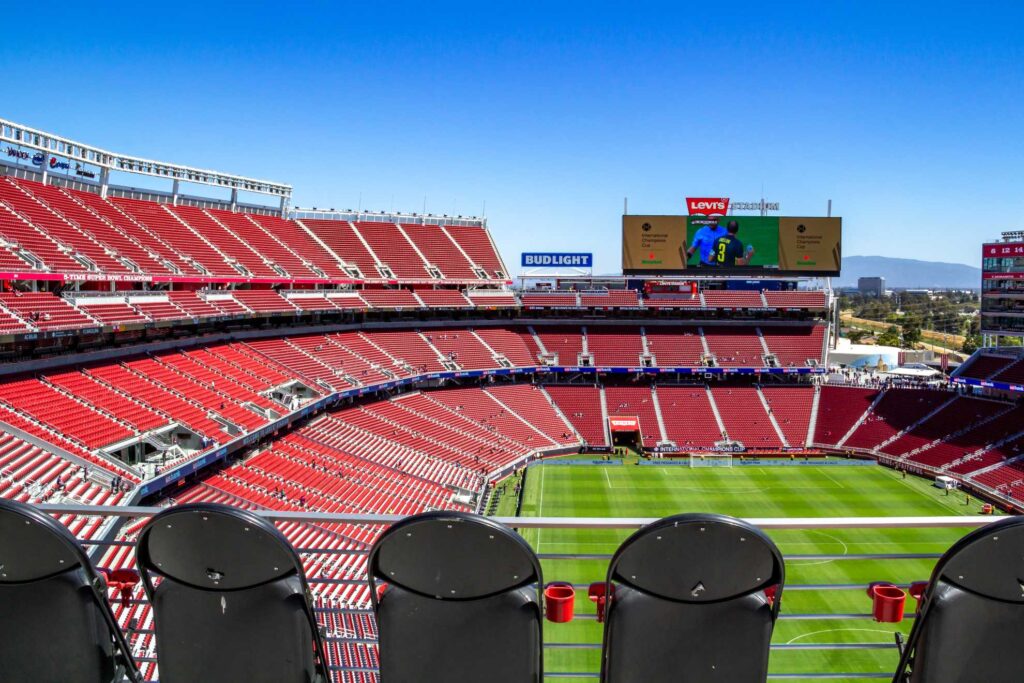
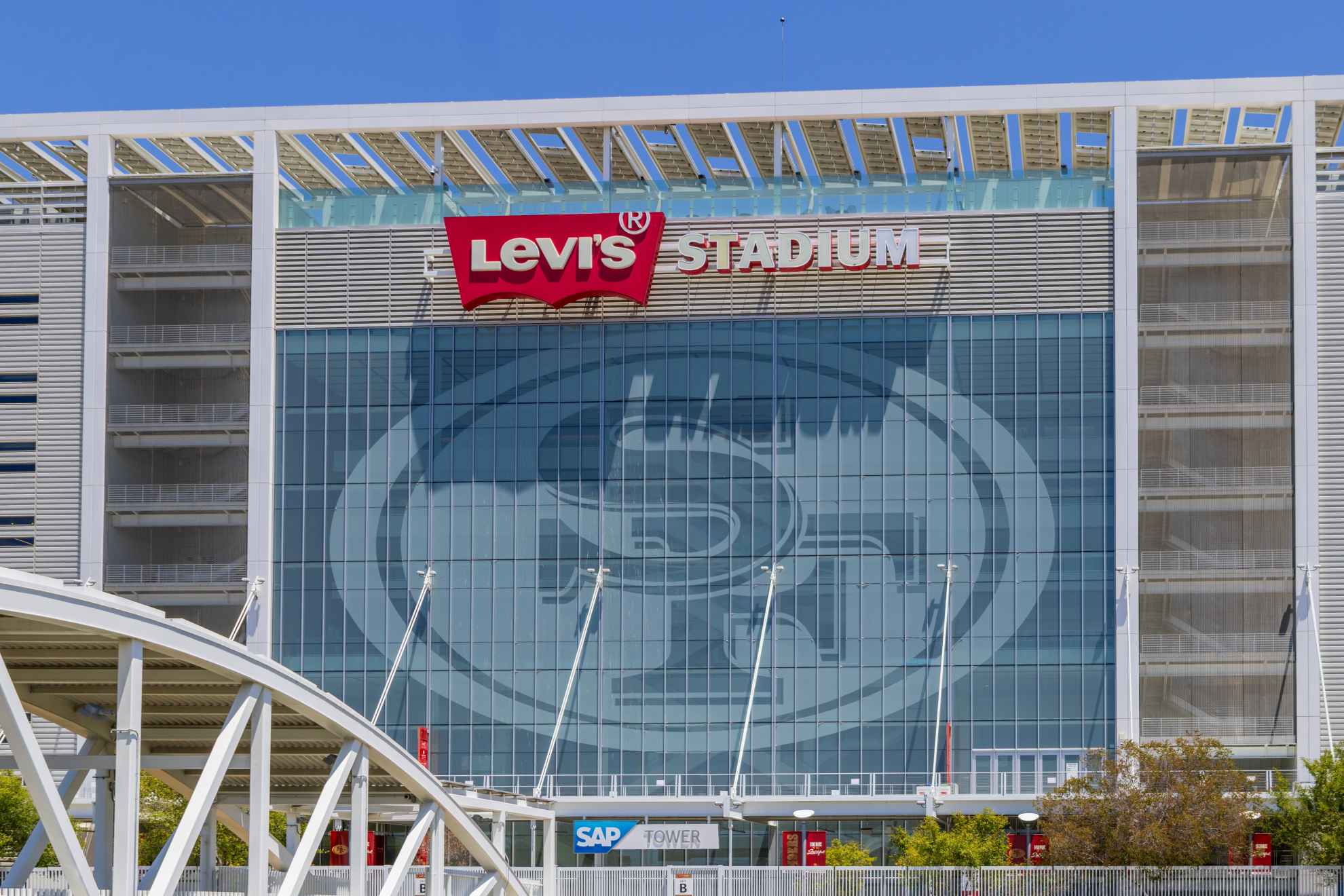
Levi’s Stadium in Santa Clara will host Super Bowl LX and later welcome the 2026 FIFA World Cup, furthering its status as a premier global sports venue
Super Bowl LX will be played at Levi’s Stadium in Santa Clara, California, with the NFL championship game set for Sunday, February 8, 2026. The contest will feature the Seattle Seahawks against the New England Patriots, bringing the league’s biggest night back to the San Francisco Bay Area for the second time in a decade.
Levi’s Stadium is more than a one-off Super Bowl venue in 2026. Just months after the NFL season concludes, it will flip into tournament mode again as a 2026 FIFA World Cup stadium, temporarily operating under FIFA’s non-sponsored naming policy as San Francisco Bay Area Stadium. That rare double duty is a big part of why 2026 is shaping up as a defining year for the venue.
What is Levi’s Stadium’s capacity?
Levi’s Stadium’s standard NFL capacity is 68,500, with the building designed to expand for major events. It is home to five-time Super Bowl winners San Francisco 49ers since opening its doors on July 17, 2014.
For Super Bowl weekend, that scalable design matters, because the NFL’s showpiece requires additional seating, hospitality, media compounds and event operations far beyond a typical regular season game day.
The stadium’s own venue information also points to a higher event configuration, listing 70,000 seats and the ability to expand further for select occasions.
In practical terms, fans should expect a packed house with added temporary infrastructure around the venue footprint, even if the exact final attendance figure depends on league and broadcast set ups.

Which World Cup games will Levi’s Stadium host?
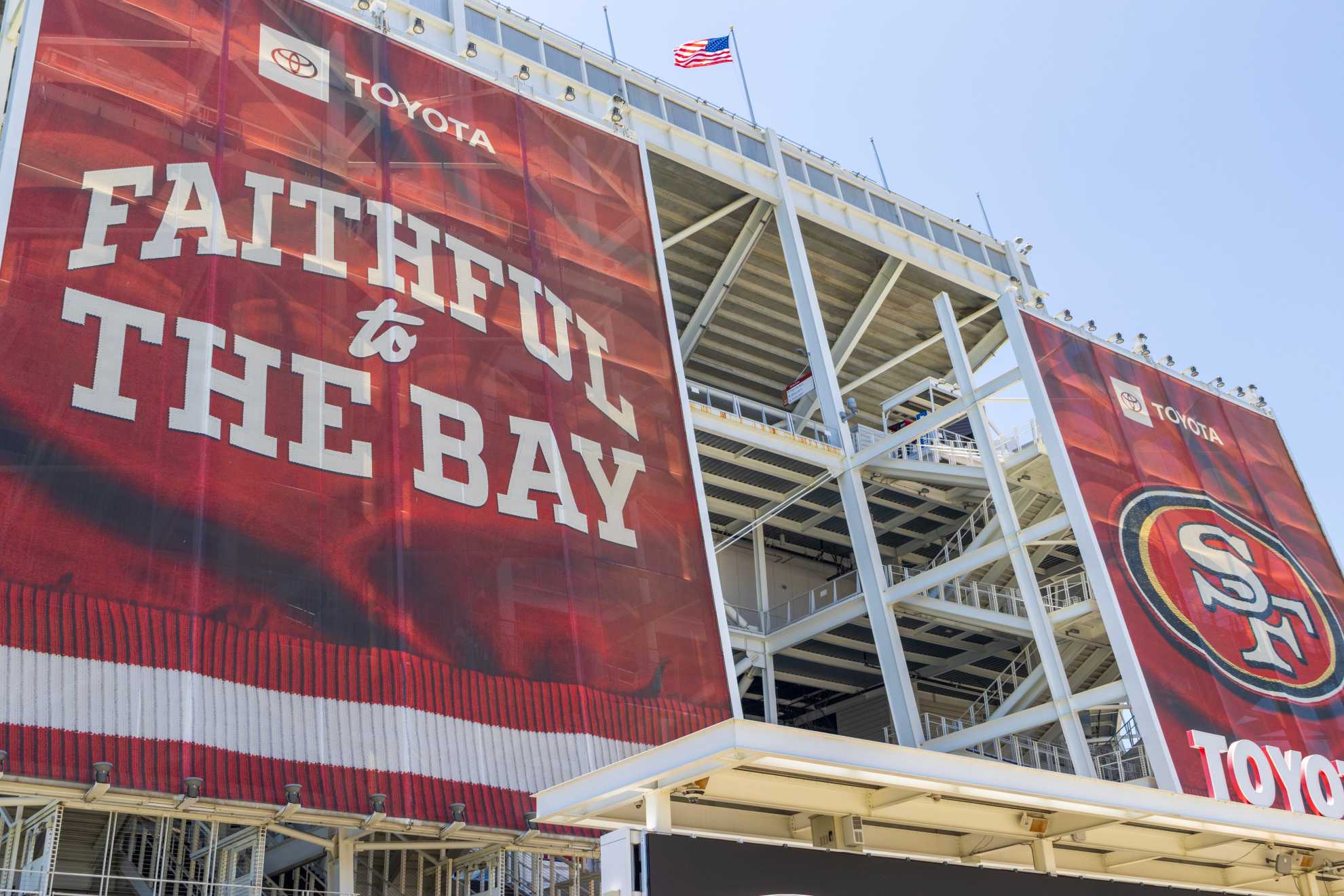
Levi’s Stadium will host a total of six matches during the 2026 FIFA World Cup, split between the group stage and the newly introduced Round of 32.
But for the 48-team World Cup, Levi’s Stadium will be referred to as ‘San Francisco Bay Area Stadium’ due to the fact that FIFA has a policy in place that prohibits corporate-sponsored stadium names in its competitions.
The first match at the Santa Clara venue is scheduled for Saturday, June 13, when Qatar face Switzerland.
Action continues on Tuesday, June 16 with a Group J encounter between Austria and Jordan, before Friday, June 19 brings a meeting between Paraguay and the UEFA Playoff Winner C, a slot that could ultimately be filled by Slovakia, Kosovo, Romania or Turkey depending on qualification outcomes.
Group-stage football resumes at Levi’s Stadium on Monday, June 22, with Jordan taking on Algeria in another Group J fixture. Paraguay return to the venue on Thursday, June 25 to face Australia, rounding off the group-stage programme in Northern California.
The knockout phase will see Levi’s Stadium host a Round of 32 match on Wednesday, July 1. That fixture will pit the Group D winners against a third-placed team advancing from Groups B, E, F, I or J.
This match carries particular significance for the United States men’s national team, as a first-place finish in Group D would place the US in Santa Clara for their opening knockout match.
Has Levi’s Stadium hosted football matches before?
Yes, and that history is one of the reasons it was an obvious candidate for a global event year. Levi’s Stadium has already hosted major football matches at both club and international level, including the Copa América Centenario in 2016.
One of the tournament’s headline fixtures was the opening match for the United States, a 0-2 defeat to Colombia at Levi’s Stadium on June 3, 2016, when James Rodriguez – a new arrival to MLS with Minnesota United – scored from the penalty spot to seal the game.
The stadium also hosted AC Milan‘s 1-0 win over FC Barcelona in a pre-season friendly as part of the International Champions Cup in August of 2018, as Portugal’s André Silva scored a last minute winner for the Italians.
The venue also has a long track record of handling huge event operations on the American football side. It hosted Super Bowl 50 on February 7, 2016, when the Denver Broncos beat the Carolina Panthers, proving it can handle the NFL’s maximum security, maximum media spotlight weeks.