
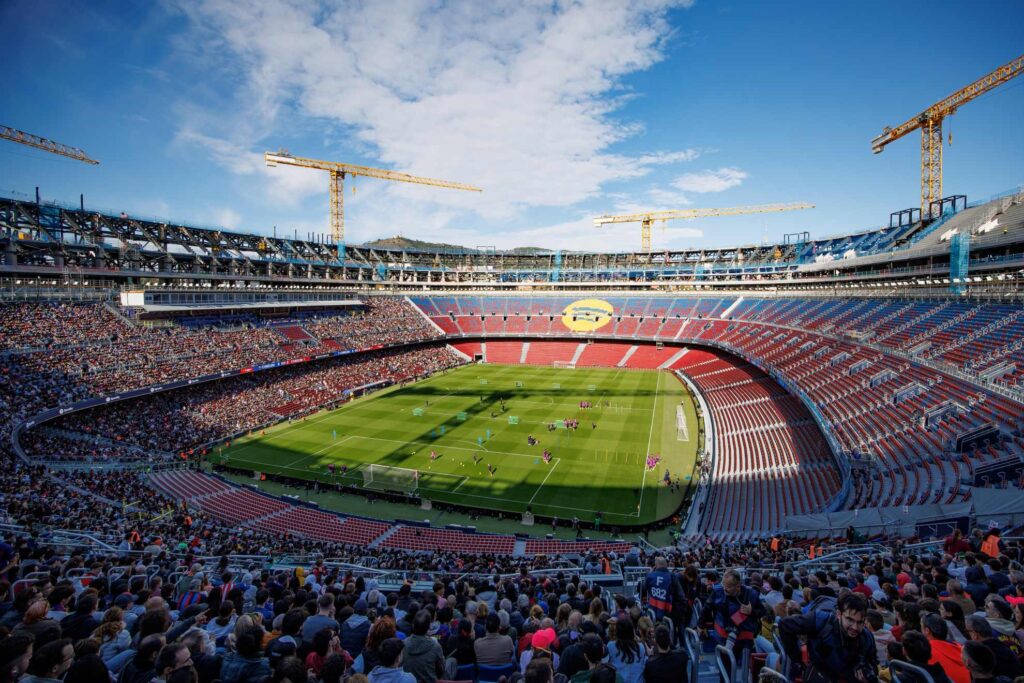
Barcelona push to bring Europe’s biggest club final back to Camp Nou while positioning the renovated stadium for World Cup 2030 consideration
Barcelona have formally put the new Spotify Camp Nou forward as a candidate to stage the 2029 UEFA Champions League final, and the club and local authorities also want the rebuilt stadium to be in the conversation for the 2030 FIFA World Cup final.
The bid for 2029 is already public and official, presented jointly by Barcelona, the Barcelona City Council and the Government of Catalonia.
If the Espai Barça redevelopment delivers the scale and modern matchday infrastructure promised, Barcelona believe they will have a venue that can compete with the biggest arenas in Europe and beyond, not only for club football showpieces but also for a World Cup hosted by Spain, Portugal and Morocco, with opening anniversary matches in South America.
When will Camp Nou renovations be completed?
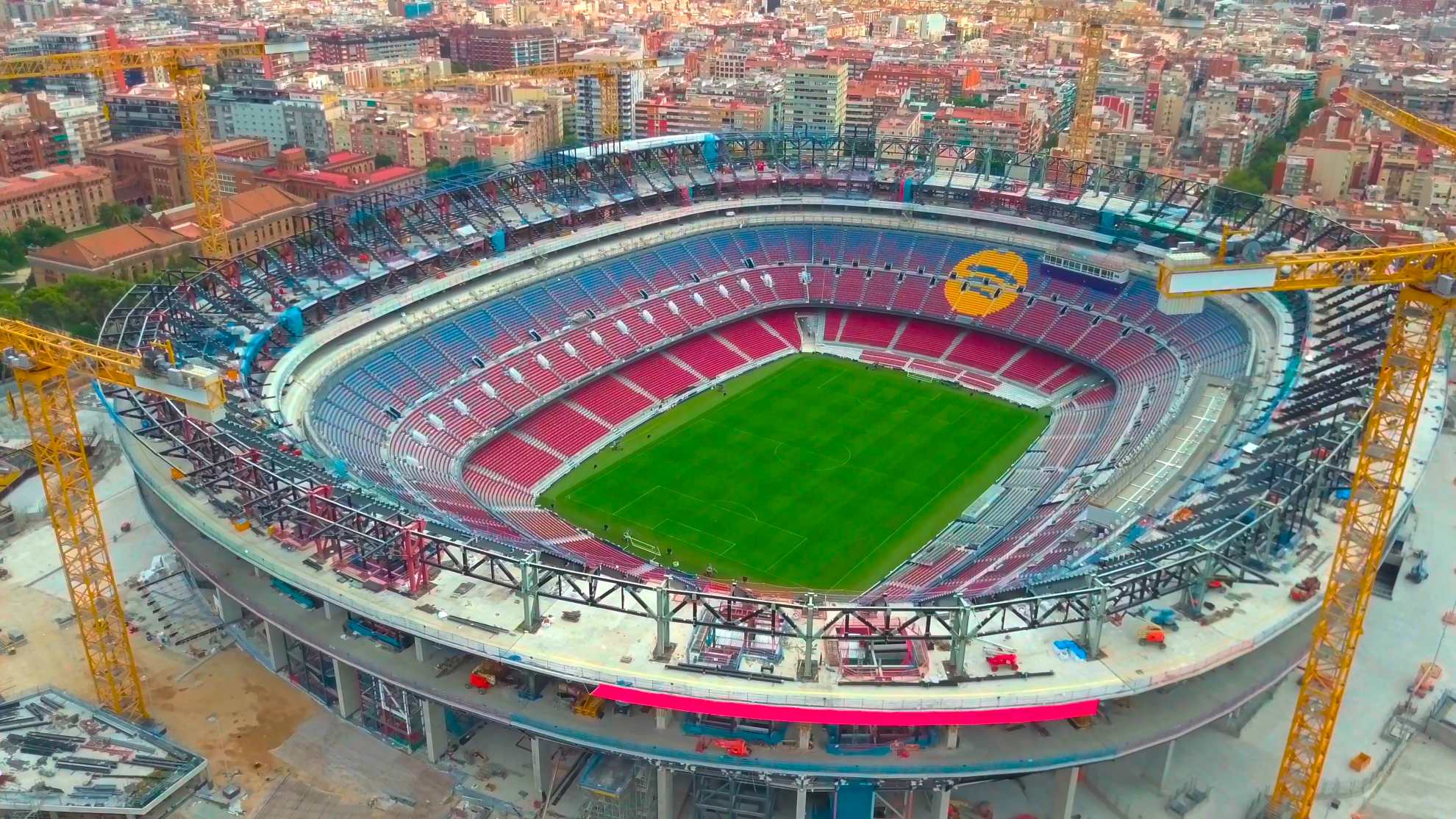
The timetable has been affected by delays, with the stadium targeted to be finished in late 2026, but with roof installation work pushing the final completion into 2027.
A Champions League final bid requires confidence that the venue is not only open, but fully finished, operationally stable and able to deliver UEFA’s broadcast, hospitality and security requirements at full scale.
Barcelona’s public messaging and contractor information have consistently framed 2026 as a key completion year for the broader build, while acknowledging that elements such as the roof are decisive for the final finishing line.

How many fans does Camp Nou hold?
Once complete, Spotify Camp Nou is expected to hold 105,000 spectators, which would keep it as the largest stadium in Spain and Europe by capacity.
This projected figure is central to Barcelona’s pitch for mega events. UEFA finals and World Cup finals prioritise venues with the ability to seat enormous crowds while also providing extensive premium seating, media facilities and safe crowd movement through modern concourses and access points.
Suggested Articles


Barcelona’s stadium redevelopment is designed to modernise those areas as much as the headline number. A larger capacity increases potential ticket supply, but it is the combination of size, hospitality inventory and event infrastructure that typically determines whether a venue becomes a realistic host for the biggest nights.
The last time Camp Nou hosted a Champions League final
Camp Nou last staged a Champions League final on May 26, 1999, when Manchester United beat Bayern Munich 2-1 in one of the competition’s defining matches. Bayern led through Mario Basler before United scored twice in stoppage time, with Teddy Sheringham and Ole Gunnar Solskjær completing the turnaround.
If Barcelona were awarded the 2029 final, it would be exactly 30 years since that night, a milestone that gives the bid a poetic hook.
Camp Nou vs Bernabéu for 2030 World Cup final
The 2030 World Cup will be hosted primarily by Morocco, Portugal and Spain, with centenary celebration matches scheduled in Uruguay, Argentina and Paraguay.
While Spain’s federation has indicated it expects the final to be staged in Spain, the specific stadium decision ultimately sits with FIFA and the tournament’s host planning process.
That sets up a familiar domestic rivalry. Real Madrid’s Santiago Bernabéu is widely viewed as Barcelona’s main Spanish competitor for the final, particularly after its recent redevelopment.

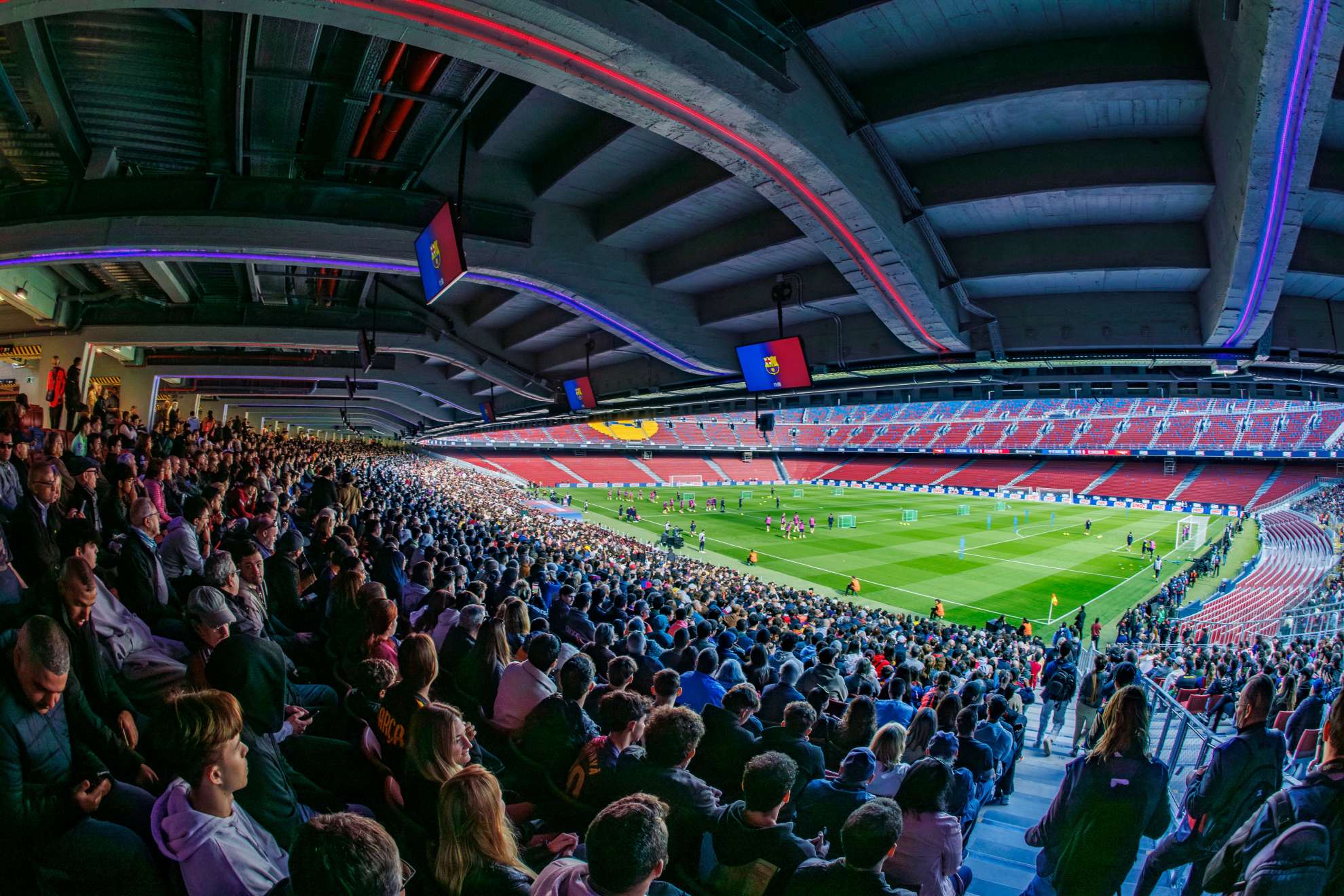
However, published bid and venue information has listed a Bernabéu World Cup capacity figure in the high 70,000s, while Camp Nou’s renovated capacity is projected at 105,000. In pure scale terms, that would give Barcelona a clear advantage, especially given that World Cup finals typically look for the largest possible stage.
Capacity is not the only factor. FIFA weighs transport, security perimeters, commercial space, broadcast compounds, hotel stock, political coordination and how the venue fits the tournament’s overall logistics.
There is also credible competition beyond Spain, with reporting suggesting FIFA have considered multiple leading options for the final, including major venues outside Madrid and Barcelona.